


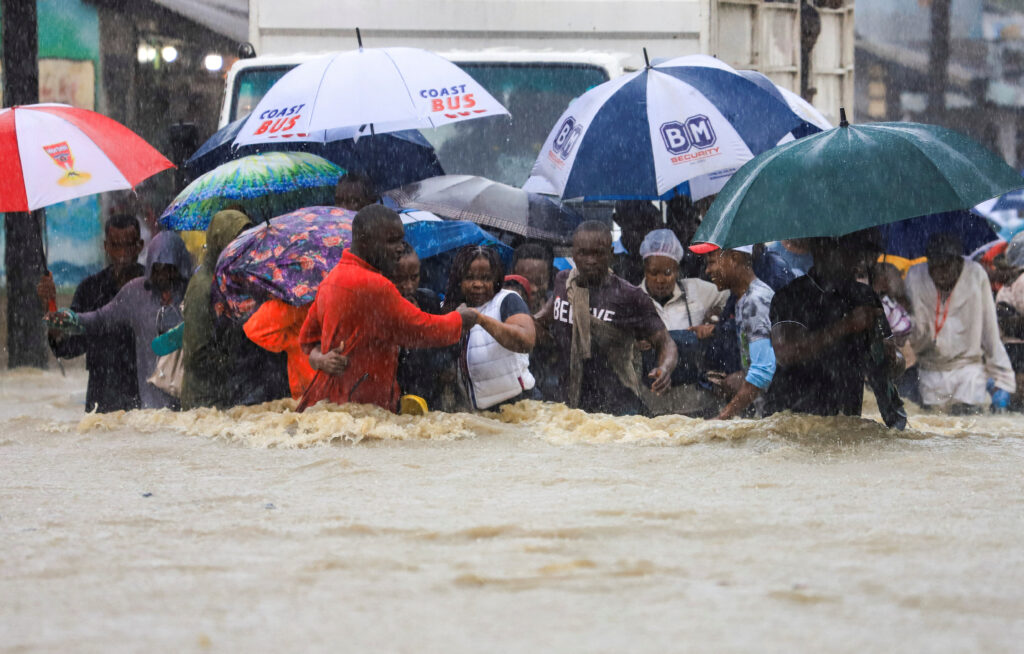
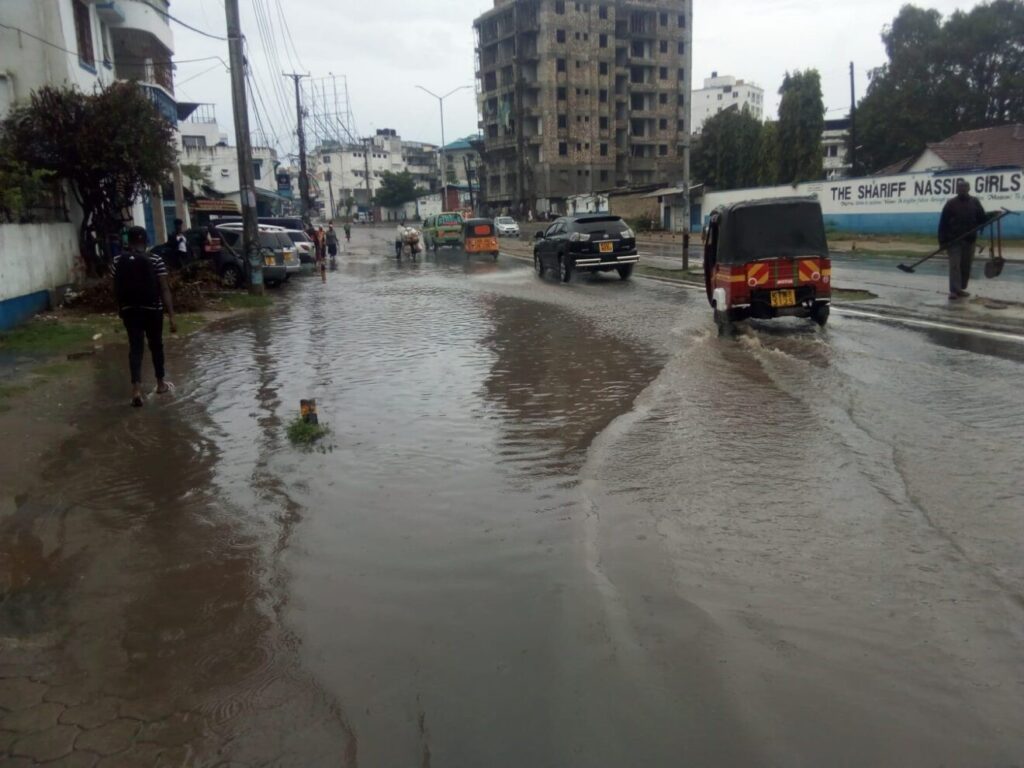
When the skies open over Mombasa, it’s not the sound of rain that people listen for, it’s the sound of trouble. Within minutes, streets that moments ago buzzed with life turn into brown rivers. Matatus stall mid-road, traders rush to save their stock, and children wade barefoot through murky water on their way home.
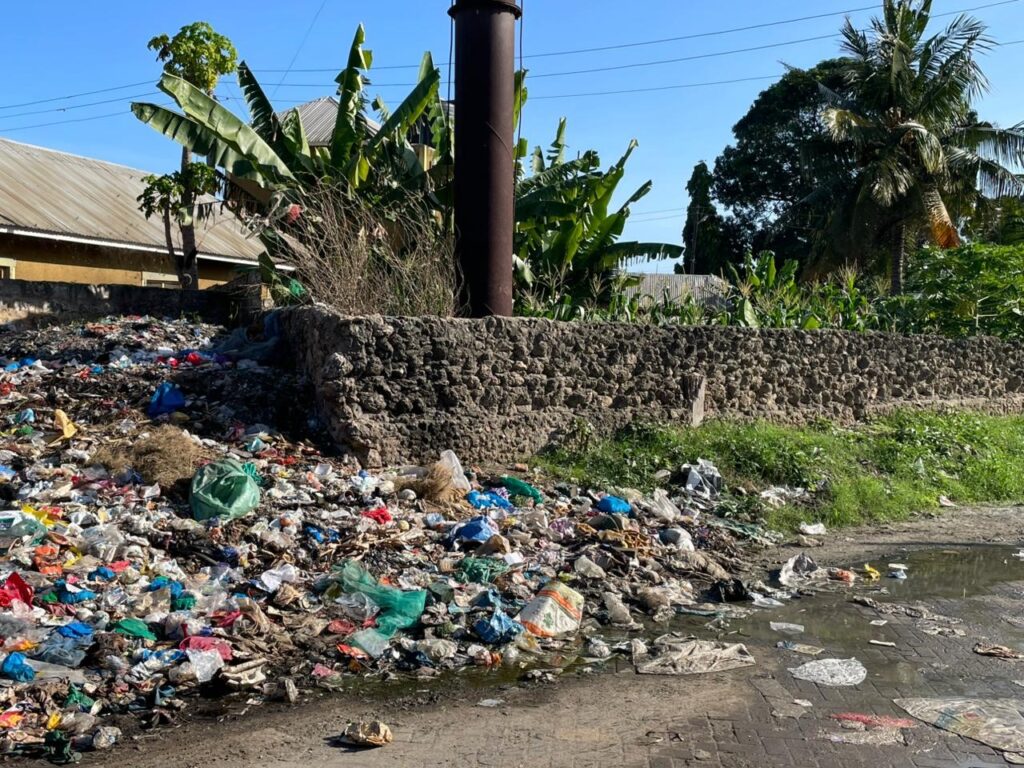
For many residents, rain is no longer a blessing. In Kongowea, Fatuma Said watches water pour into a trench behind her house, already clogged with plastic bottles and food wrappers. She says the community now braces for floods instead of celebrating rainfall. Every drop, she explains, carries anxiety not relief.
Sinking city
Every rainy season, Mombasa relives the same nightmare. From Kibarani to Changamwe, flooded roads trap vehicles and leave drivers stranded for hours. During a recent downpour, I met a motorist stuck near the Kibarani bridge. His car’s wheels were buried in muddy water, and traffic had come to a standstill. He told me this happens every time it rains, movement stops, tempers rise, and business stalls.
In Likoni, boda boda riders abandon their motorbikes whenever the rain begins, knowing the roads will quickly vanish under water. Even in affluent neighborhoods like Nyali and Kisauni, residents spend sleepless nights sweeping out water that seeps through their gates. The floods, it seems, spare no one.
Call for re-planning
Experts point to an aging and overstretched drainage system as the root of the problem. Mombasa’s current infrastructure was designed decades ago for a much smaller population. Back then, open spaces and wetlands absorbed most runoff. Today, concrete has replaced grass, and buildings stand where natural waterways once flowed.
Urban planners warn that unregulated construction has worsened the situation. Many developers have built over natural drainage channels, blocking the paths that water should follow. And when waste piles up in the few remaining drains, the system collapses completely.
Residents say they often have to unclog the trenches themselves using sticks and buckets, but within days, plastic waste fills them again. County clean-up crews usually arrive only after heavy flooding has already hit.
Fighting Back
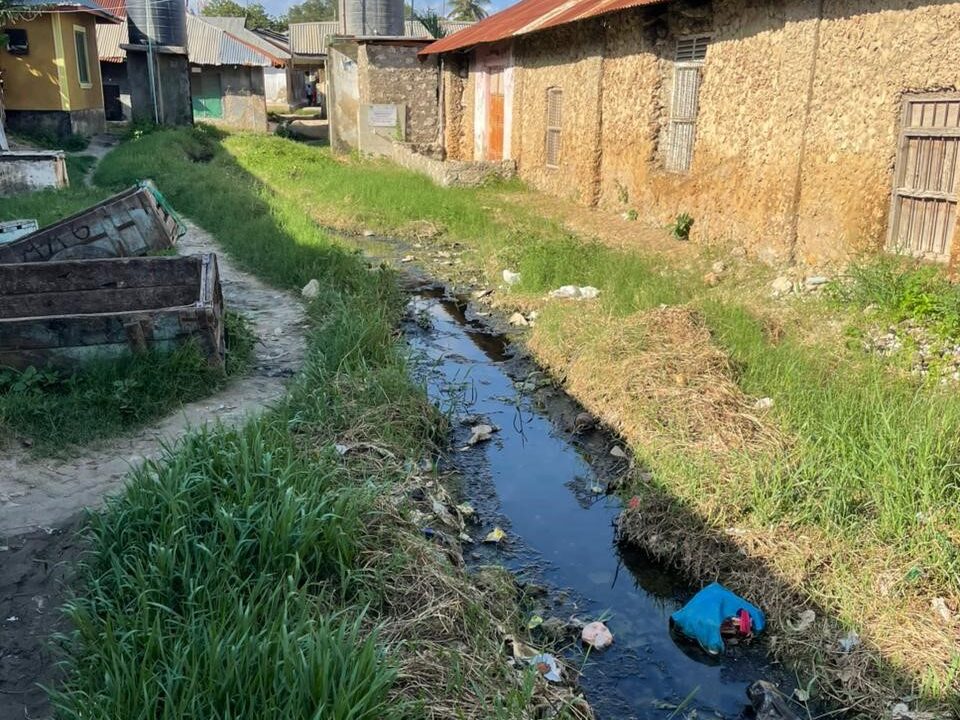
The situation is most desperate in Mandizini and Amazon, informal settlements that sit dangerously close to the ocean. In recent months, residents have noticed that water from the sea now mixes with rainwater during high tide. A drainage channel that once helped direct water away was recently blocked by new construction, and locals say it has made their lives unbearable.
Families here tell stories of ocean water seeping into their houses, destroying books, mattresses, and even food. Some children have missed school for days after their homes flooded. The residents worry that the problem will only grow worse if nothing changes soon.
Climate Change
As a low-lying coastal city, Mombasa faces a double threat: rising sea levels and heavier rains linked to climate change. Even a small rise in the ocean pushes salty water back through the drainage lines, flooding streets from below.
Environmental experts warn that if no action is taken, some neighborhoods could become permanently waterlogged in the coming years. The National Environment Management Authority(NEMA) has urged the county to integrate climate adaptation into urban planning, but progress remains slow.
Floods
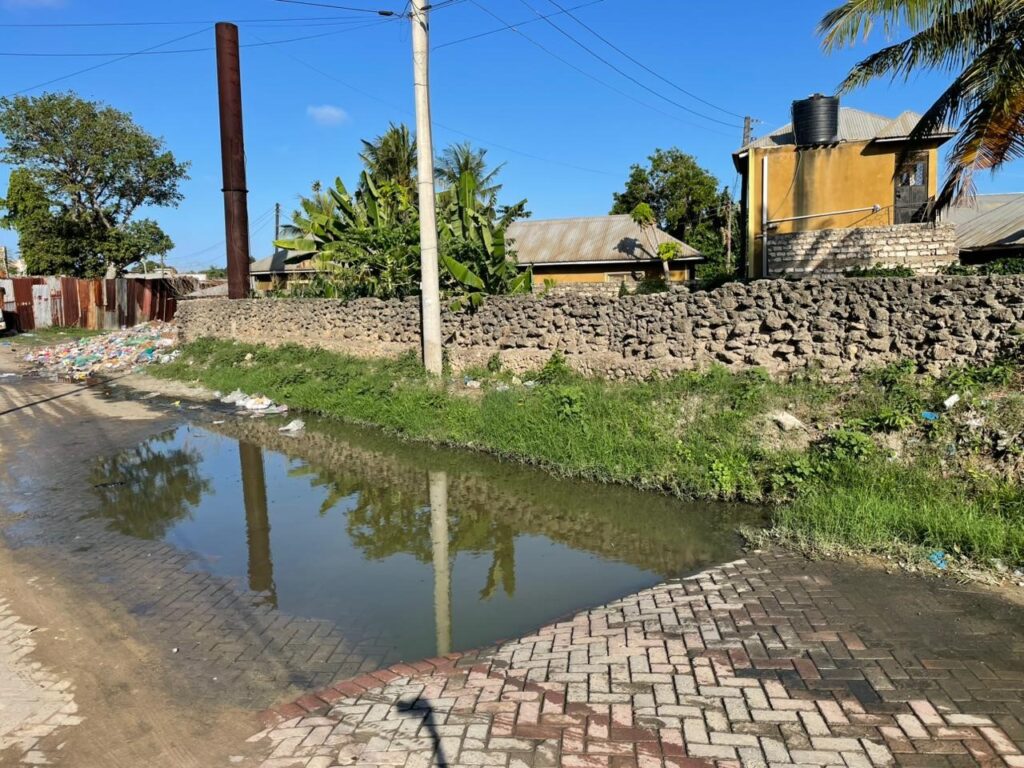
The impact of flooding goes beyond inconvenience. In the Kongowea market, traders lose entire stalls of goods when water mixes with sewage. Some say they’ve stopped restocking certain items during the rainy season to avoid losses.
In Changamwe, residents live with sewage that flows across roads and playgrounds after every storm. It’s not just unpleasant, it’s dangerous. Outbreaks of waterborne diseases become more common, and families spend days living in damp homes, waiting for the sun to dry what the rain destroyed.
County
County authorities maintain that solving Mombasa’s flooding crisis requires more than drainage upgrades. They cite poor urban planning, encroachment on water paths, and rapid urbanization as key contributors.
The county has launched rehabilitation projects under the Kenya Urban Support Program (KUSP), targeting areas such as Old Town and Nyali. However, progress is slow, and residents in informal settlements say they rarely see these improvements reaching them. The county estimates that fully upgrading the drainage network could cost over KSh. 20 billion, a figure far beyond its current budget.
Hope
Despite the odds, some residents are taking matters into their own hands. In Majengo, local youth groups meet every weekend to clear blocked trenches and collect litter before it clogs the flow. Their efforts may seem small, but they have reduced flooding in parts of the area.
Urban experts say such community-led initiatives, combined with government support, could offer lasting solutions, especially if paired with reforestation, better waste disposal, and the restoration of wetlands that once acted as natural sponges.
Water and Willpower
When the rains pound Mombasa, they wash away more than dirt they uncover years of poor planning, forgotten promises, and unending resilience.
Yet amid the chaos, the spirit of Mombasa remains. Traders dry their goods under the sun, mothers clear trenches outside their doors, and young people shovel mud to keep their homes safe.
The city’s beauty lies not just in its beaches, but in the will of its people those who refuse to sink even when the streets around them do.
As one Kongowea resident told me, gazing at the dark clouds above: “We love this city. We just want it to love us back even when it rains.”